APPLICATION
/ Geosteering
/ Formation Evaluation
TECHNOLOGY
/ Logging While Drilling (LWD)
/ Smart Motor
/ Measurement While Drilling (MWD)
/ Falcon MP MWD
LOCATION
/ USA (onshore)
DOWNLOAD CASE HISTORY
/ PDF File
CHALLENGE
An operator interested in boosting oil production in a mature field realized the need for precise well placement of a planned horizontal well in proximity to existing vertical wells.
The well was to land at the top of the reservoir in a 5ft window and drill a 1,500ft lateral in this same target window to maximize hydrocarbon production. An intermediate casing string was planned after the curve section was landed, and the lateral section was to be drilled to TD using a 6.25″ bit. Due to previous wells experiencing issues getting the intermediate casing string to bottom, the curve was to be drilled with a 9.5″ bit to allow for extra clearance of the 7″ casing string.
SOLUTION
To land the well at the precise target depth near the ceiling of the sandstone reservoir, Scientific Drilling utilized its Smart Motor, a unique BHA configuration incorporating at-bit gamma/inclination sensors in the mandrel of the TiTAN22 Performance Motor. This new instrumented motor design allowed the optimal motor build, incorporating a 2.25° motor bend and near-bit stabilizer to improve dogleg output in the 9.5″ hole section. While the well design called for a planned 9°/100 curve section, the Smart Motor BHA yielded up to 15°/100 dogleg output while drilling the curve section.
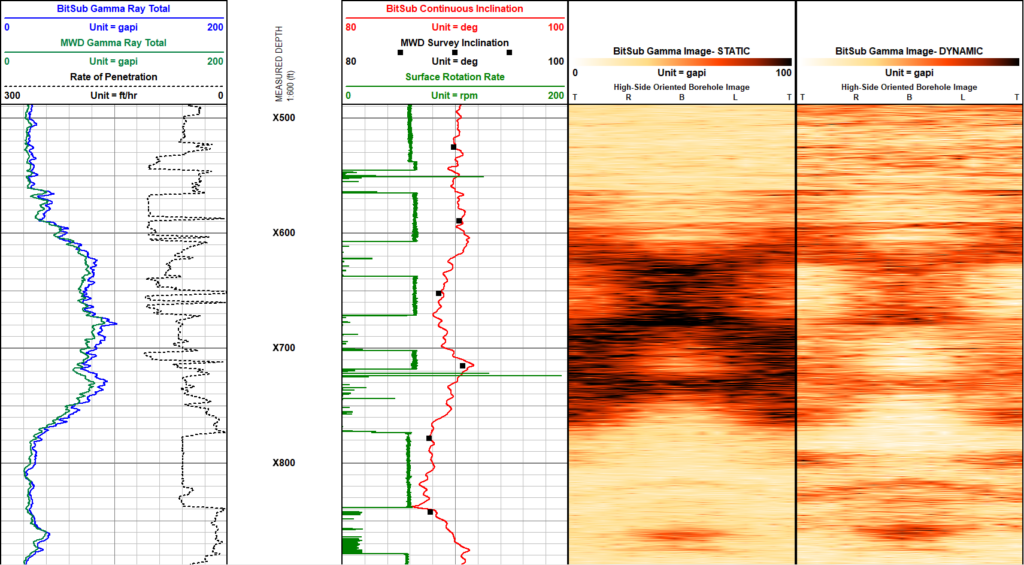
At-bit gamma ray and inclination were pulsed to surface via Scientific’s Falcon MWD system. The Smart Motor utilizes proprietary Wi-Sci™ EM short-hop technology to establish the bi-directional communication between the MWD tool and the at-bit electronics. This proven short-hop technology works in both water and oil-based mud systems, allowing greater selection of mudmotor power sections vs traditional wired mudmotors with at-bit electronics. Once the curve section was landed in-zone and an intermediate casing string ran to bottom successfully, a similar lateral BHA setup with at-bit electronics, configured with a lower motor bend, was used to drill the horizontal well in the target window of the reservoir.
RESULTs
Equipped with at-bit inclination, the directional drillers were able to proactively monitor motor yields to ensure they did not deviate too far from the well plan or put large doglegs in the curve section. The curve was landed on target and the intermediate casing string was ran to bottom without issue. While drilling the lateral section of the well, real-time azimuthal gamma ray at the bit allowed for precise geosteering and well placement in the oil-saturated zone of the reservoir, maximizing hydrocarbon production of the well.
YOU MAY ALSO BE INTERESTED IN
Reservoir Evaluation of an Emerging Shale Play in the Permian Basin with Integrated LWD Resistivity